San Leandro neighborhood · 24/7
Davis Street and the works: man-doors, roll-ups and exit devices on a belt that starts before six in the morning
The industrial ground west of the tracks along Davis Street and out toward Alvarado Street. Warehouses, body shops, small factories, freight docks, fenced yards and the old bottling works. Steel in steel frames, chains and padlocks, an exit device on every rear wall. The van is based off this street, so seventeen minutes is a short number.
4.9 / 5· 268 reviews from San Leandro, the works and the strip beside them
17 min
Avg. arrival
$89
Service call
24/7
Availability
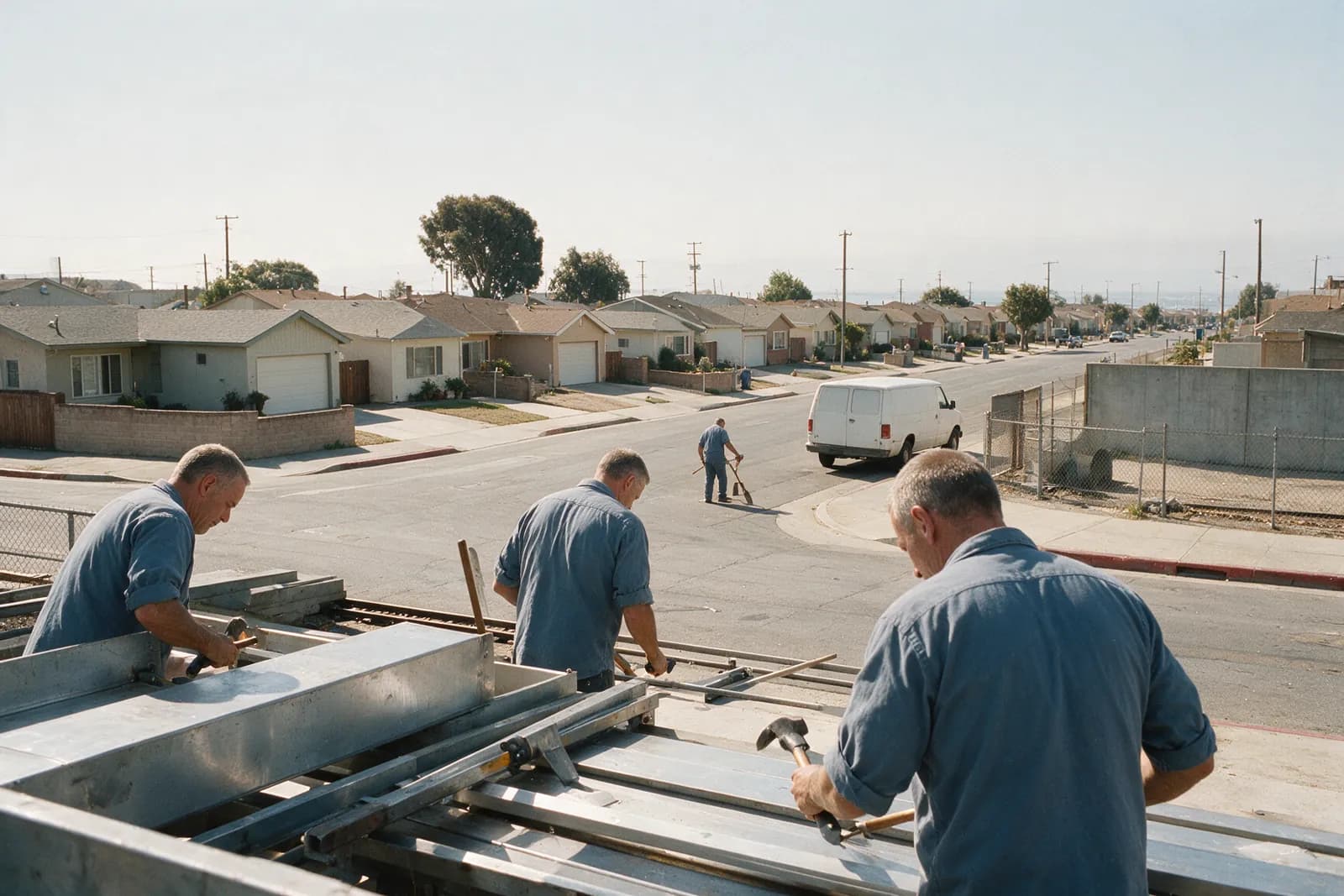
Nothing about this belt runs on office hours. A plant with a five-thirty start needs the man-door beside the roll-up working at five-thirty, and by nine the loss is a shift, not an inconvenience. So these calls come in the dark, and the pricing is set the same way at that hour as at noon. A business lockout is $129 to $239. A mortise cylinder in a steel door that has been getting rougher for six months and has finally stopped is repinned at $26 to $42 rather than thrown out. A latch case chewed up by twenty years of pallet jacks against the frame means storefront and steel door hardware at $155 to $449 per door. Chain padlocks on roll-ups seize every winter and get cut and swapped as a minor line, with the replacement grade named while the figure is being quoted so a manager can approve it in one call.
Exit devices are the other constant. A bar either holds or it does not, and a bar that has stopped holding is far more often a device left dogged, a rod out of length, or a strike that shifted when the frame was hit, than a device that has died. All three are adjustments, and adjustment is what happens first. When the mechanism truly is finished, replacement is $289 to $739 and it is counted per door, which matters in a building with four rear exits and one budget. Forced entry through a man-door or an office window over a weekend is repaired at $165 to $419, covering the frame, the strike and the cylinder that took the load, with the building secured again during the same visit and the parts itemized on the emailed receipt for the insurer and for the property manager.
The bigger jobs on this belt are quoted rather than listed, because no list can describe a building. When the yard, the dock, the parts room and the front office all have to open to different people while one key covers everything, that is a master key system and it is priced against the actual door schedule. Access control on a door that three shifts pass through, where a card has to stop working the afternoon somebody leaves, is quoted the same way. Both come with a chart of which key or credential opens what, since in a building with turnover the chart is the first thing to go missing. Fleet trucks and staff cars in the yards bring lockouts at $99 to $189 and lost keys cut at $145 to $389. Calls are answered 24/7; $80 sits inside the figure overnight and $45 in the evening.
Say which opening it is and where it sits: man-door beside the roll-up, the roll-up itself, a rear exit with a bar, the office door, or the yard gate. Say what time the shift starts, so the visit lands ahead of it, and whether anybody is on site to sign.
Most requested in Davis Street & the works
FAQ
Asked from Davis Street & the works
Can somebody be here before a five-thirty start?+
Yes, and on this belt that is routine rather than a favor. Say the shift time on the call and the visit is set ahead of it. A figure built at five in the morning is built the same way as one at noon, with the overnight hour counted inside it before you agree to anything.
The exit device on the back door has stopped holding. Does it need replacing?+
More often it needs adjusting. A bar left dogged, a vertical rod out of length, or a strike knocked out of line by a pallet jack accounts for most of them, and all three are put right during the visit. A device that is genuinely finished is quoted per door, so a building with four rear exits hears four figures.
Our building has never been surveyed. Can a master key set be quoted over the phone?+
Not honestly. A yard, a dock, a parts room and a front office that all have to open to different people is a door schedule, and a schedule has to be walked. The walk is arranged first, then the quote comes back as one itemized figure with a chart of which key opens what.
Open 24 hours, 7 days
Houses in the morning, shop floors after, and the figure said before either one starts
San Leandro, San Lorenzo, Ashland, Oakland, the airport and Doolittle strip, and Alameda across the channel, 24/7, holidays included. Describe the door, hear one figure with the $89 visit inside it and the unit it is counted in, and the lock gets opened without damage wherever it can be. The receipt says what the call said, whether the deed is in your name or the lease is.