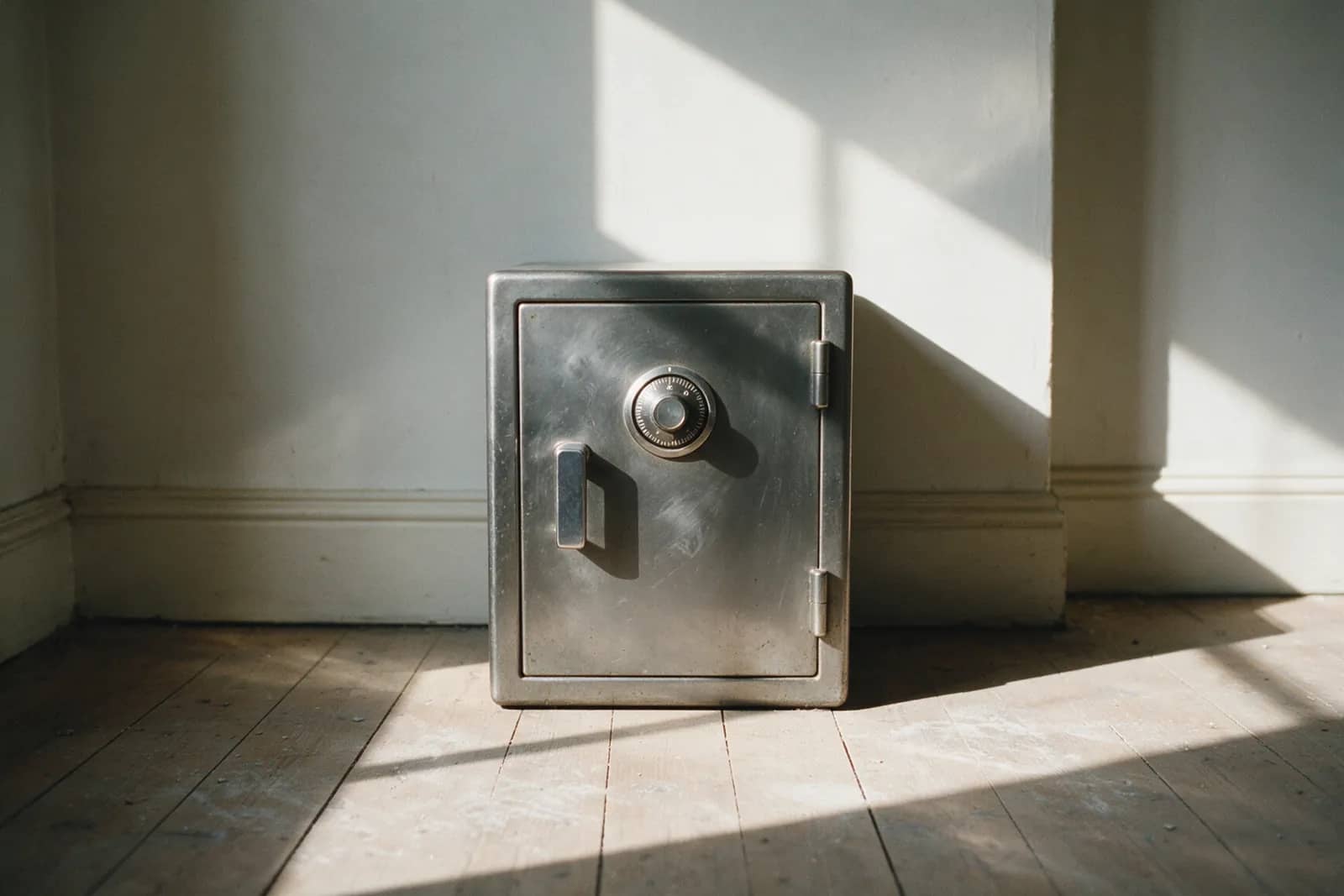
The safe that came with the house
This call comes from the long-owned houses more than anywhere else. A house on a wide street near Estudillo Avenue sells after fifty years and there is a safe bolted into the floor of a closet. A family clears a parent's house in Best Manor and there is a small one at the back of a wardrobe. Somebody in Washington Manor finally deals with the box in the garage that has been ignored since a move in 1998. In every version the safe is shut, and nobody alive has the combination.
Nothing about it is urgent, which is worth saying, because that removes the pressure that leads people to attack a safe with a grinder. A closed safe is not going anywhere. It can be opened properly on a Tuesday morning at the same figure it would cost on a Tuesday night, and doing it properly is the difference between a safe you can keep using and a hole with a door hanging off it.
What is actually in the room
Four kinds turn up in San Leandro houses and they behave differently. A small fire box, sheet steel with a thin lining and a key or a simple dial, is common in bedrooms and is the least substantial of the four. A wall safe set into the studs between two bedrooms, popular in the fifties and sixties, is usually shallow with a light door. A floor safe cast into the slab of a garage, which is what a lot of the pre-war and immediately post-war houses have, is a serious body with a good door and is the hardest of the four to move and the easiest to underestimate. And a modern gun safe or a keypad box from the last twenty years, which is the one most likely to have an electronic lock in it.
The other split is dial against keypad. A mechanical dial has no battery and does not die; if it will not open, either the combination is wrong or something inside has failed. A keypad has a battery, and a dead battery is by a distance the most common reason a keypad safe stops responding. Before anything else, fresh batteries go in, and on many models that is the entire visit. It is worth trying yourself before calling, and it is asked about on the call for exactly that reason.
How one gets opened without wrecking it
The order of work is always the same and it starts with the free things. Batteries on a keypad. Any override key, which on plenty of household safes lives in a small keyway behind the logo plate or under a rubber cover and can be picked or made. Any combination that anyone remembers even partially, since a remembered first number narrows things a long way. On some mechanical locks a technician can work out the combination by feel and by watching the dial's behavior, which takes patience and time but leaves the safe exactly as it was.
Drilling comes last, only when the routes above have run out, and only after you have heard what it involves and said yes. Done properly it is not violence. It is a small hole in a specific place, worked out from the make and model, that lets the lock be seen or the bolt released. Afterwards the hole is plugged and the lock repaired or replaced so the safe still works and gets a new combination. What ruins safes is the other approach: a grinder through the door, a pry bar at the hinge, or a hole drilled in the wrong place by somebody guessing, which on a fire safe releases the insulating fill and on a good door hits a hardplate that was put there for exactly that reason. Safe opening is $185 to $495, and that figure is the same whether the safe opens on batteries in four minutes or takes two hours.
What is usually inside
It is worth setting expectations, because people build them up. The usual contents of a safe in a house that changed hands are papers: a deed, an old insurance policy, a passport that expired in 1994, savings bonds, photographs, a watch that does not run, some coins that are worth face value and a few that are not. Occasionally jewelry. Sometimes nothing whatsoever, because the last owner emptied it and simply spun the dial on the way out.
The other thing that turns up is a firearm, most often in a garage safe or a wall safe, and most often one nobody in the family knew about. If a safe might contain one, say so on the call. It changes nothing about the price and nothing about the work, but it means the door gets opened facing the right way and handled sensibly. Whatever is inside stays inside; it gets opened and it is yours, and the receipt records that a safe was opened rather than what was in it.
What to do with it afterwards
Once it is open there are three sensible outcomes. Keep it and use it, which for a decent floor safe or a solid dial safe is usually the right answer, since a body cast into a garage slab is more secure than anything you could buy and carry in. It gets a new combination you choose, the lock gets serviced, and it becomes yours instead of a previous owner's. On a keypad model, a note of the battery type taped inside the door saves a call in four years.
Keep it but move it, which is a real job and worth being honest about: a small fire box goes in a car, and a full-height gun safe does not go down a staircase without equipment and people. Or be rid of it. A wall safe comes out and the hole gets patched. A floor safe cast into a slab mostly does not come out at all, and the practical answer is to leave it in place, open and empty, with the door unlocked so the next owner is not making this call again in twenty years. That last suggestion costs nothing and is the one people are most glad to hear.
Booking it, and the figures
Three things said on the call settle the figure and shorten the visit. The make and model, off the badge or the plate on the door if there is one, and a photograph of the door and dial or keypad sent through is better than any description. Where it is: closet, garage floor, wall, upstairs bedroom. And whether it is a dial or a keypad, plus whether fresh batteries have already been tried. From that the figure gets said, inside $185 to $495, with the $89 visit already counted in it. Arrival is about fifteen minutes to the Estudillo Estates streets and fifteen to thirty minutes across the rest of San Leandro.
The Same Number Twice runs here like everywhere else. One figure gets said on the call and it takes in the visit, the labor and any parts. The receipt shows that same figure whether the door came open on batteries or after two hours of patient work. Nothing gets drilled while an intact route exists, and where drilling is the only route left, what it involves and what it leaves behind gets described first, it waits on your word, and the number does not move because of it. Card or tap at the house, an itemized receipt by email, and a written line naming the safe and the work for an insurer, an executor or an estate file when one is needed. Calls answered 24/7, with $45 inside the figure between 8pm and midnight and $80 between midnight and 7am, though a safe in a closet is rarely a reason to pay for either.
Quick answers
What does it cost to open a safe with no combination?+
$185 to $495, with the $89 visit already inside the figure. It is the same figure whether the safe opens on fresh batteries in four minutes or takes two hours of work on the dial, so nobody is paying by the difficulty of a problem they did not create.
Will the safe be ruined?+
Not in the ordinary case. Batteries, an override key and work on the dial come first, and all of those leave the safe exactly as it was. Where a hole is genuinely the only route left, it is small, placed from the make and model, and plugged afterwards with the lock repaired and a new combination set, so the safe keeps working.
There is a floor safe cast into my garage slab and I do not want it. Can it be removed?+
Usually not, and it rarely needs to be. A body set into a slab is best left where it is, opened and empty, with the door left unlocked so nobody has to make this call again in twenty years. A wall safe does come out, and the opening gets patched.
Need it handled rather than read about?
(510) 901-3716More guides