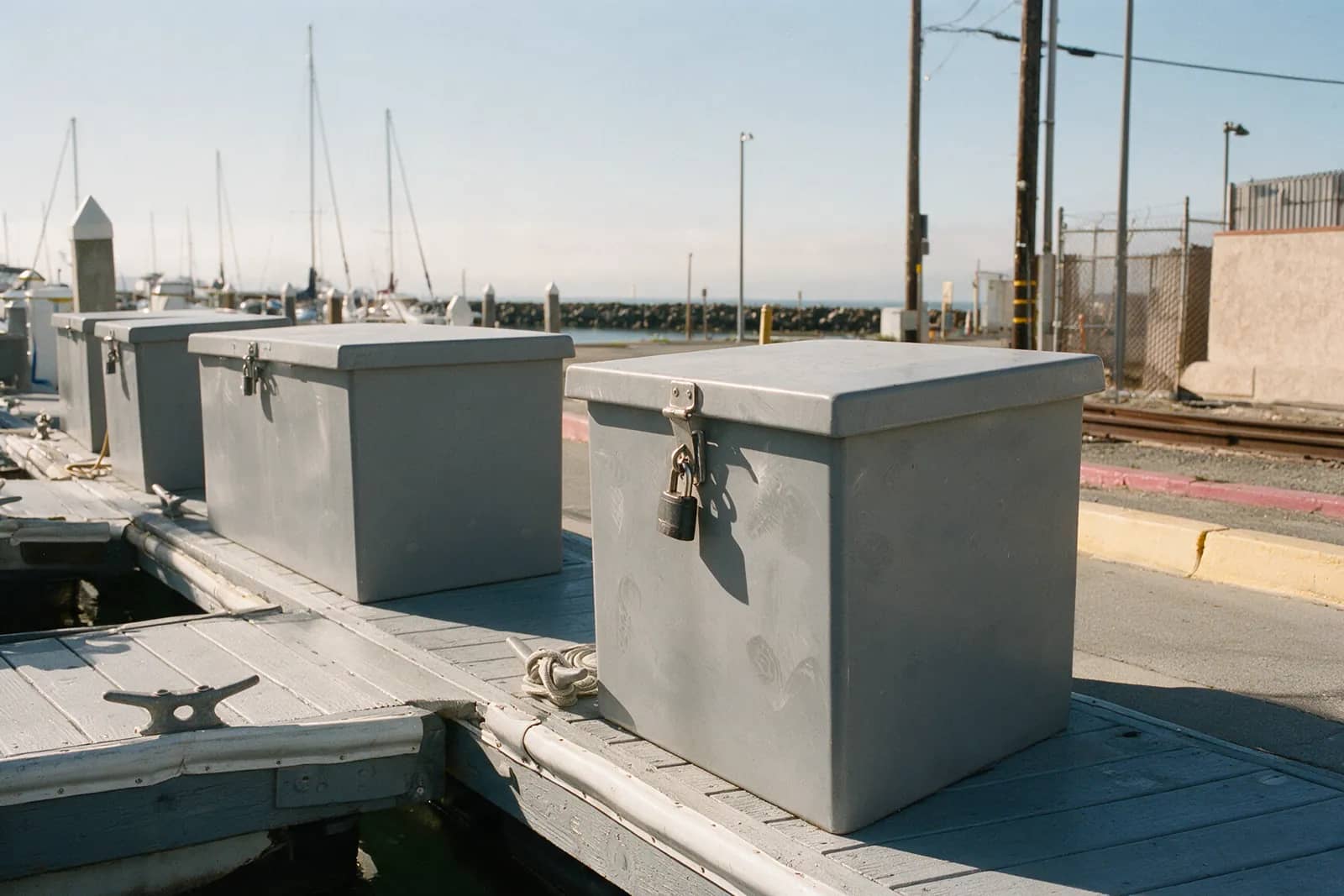
What the weather out here does to a lock
The marina sits at the end of Marina Boulevard with nothing between it and the water, and everything on a dock lives outdoors in salt air. Fog comes in most nights, the wind comes down the fairway most afternoons, and a lock that would last twenty years on a front door in Broadmoor gives out here in two or three. It is not usually the mechanism that fails. It is corrosion: white bloom on the shackle, a plug that will not turn because the wafers have swollen in their slots, a keyway packed with salt and grit.
So the useful question at the marina is not which lock is strongest. It is which lock is still going to open in January. A brass body handles salt better than plated steel, a stainless shackle better than a chromed one, and a body with drain holes at the bottom better than one that holds water in the base. A shot of dry lubricant in the keyway twice a year does more for a dock padlock than any upgrade to the lock itself. And when a padlock has been on a box for five seasons and is starting to feel gritty, it is a consumable. Replacing it before it seizes is cheaper than opening it after.
The dock box and what should be on it
The box on the finger holds lines, fenders, a hose, life jackets and whatever the boat cannot store. Most of them come with a hasp, and most of the hasps get a padlock chosen at a hardware counter on the way down. Two things matter. The shackle should be as short as the hasp allows, so there is nothing to get a tool behind, and a shrouded body where the shoulders cover the shackle is better again. Long-shackle padlocks are common on the docks and they are the easiest thing out there to defeat, usually for no reason other than that the long one was the one on the shelf.
The second thing is keying. A boat owner typically ends up with a padlock on the box, another on the cabin hasp, one on the outboard clamp and one on a locker ashore, all different, all on a ring that goes down a dock in the wind. Where those padlocks take rekeyable cylinders, keying them alike is $26 to $42 per cylinder and turns four keys into one. Where they do not, matched replacements do the same job. Either way the point is one key on a lanyard rather than a fistful over the water.
Cam locks, hatches and companionways
Marine hardware is not house hardware and it should not be treated like it. Cabin doors, lazarette hatches, sail lockers and glove boxes mostly use small cam locks: a short barrel with a flat tongue that rotates behind a lip, operated by a thin flat key. They are light-duty by design, they corrode readily, and they are set into fiberglass, teak or a thin aluminum frame.
That is why the one thing that must not happen to a seized cam lock is drilling. Drilling a cam lock out of a fiberglass hatch does not just destroy a five-dollar barrel. It cracks the gelcoat around it, opens a path for water into the core, and turns a lock problem into a fiberglass repair. These come out intact: the barrel gets picked or the retaining clip released from behind through an adjacent opening, and then a matching barrel goes back in the same hole. On a companionway with a hasp and a padlock the answer is usually simpler still, since the padlock is the part that has seized and the boat itself is untouched. Any decision that would mark a boat gets described first, with what it would leave behind, and nothing happens until you have said yes.
The ring that also has a truck key on it
A large share of the calls that come from Marina Park are not about the boat. The keys people lose down here are the whole ring, and on that ring is the truck parked a hundred yards away. A set that goes over the side while a line is being handled, or gets left on a thwart while the boat goes out, takes the vehicle with it.
That is ordinary automotive work done in the marina lot rather than in a driveway. A car lockout is $99 to $189. A replacement key cut and paired to the vehicle so it will start is $145 to $389. A fob that has stopped working after a soaking is $89 to $185, and a fresh coin cell gets tried before anything is programmed, because a fob that got wet often comes back. Trailer coupler locks and outboard locks come up in the same visits and are worth mentioning on the call so the right things come out of the van. If the ring genuinely went into the water, say so; the old key gets deleted from the vehicle in the same visit so it cannot start the truck if it ever surfaces.
What is the harbor's and not yours
Some doors down here belong to the harbor rather than to a boat owner, and it saves everyone time to know which. The gates onto the docks, the restroom and shower doors, the harbor office and the storage lockers the harbor issues are the harbor's hardware, and work on them is authorized by the harbor rather than by a tenant. If you have lost a gate key or a locker key issued to you, the office is the first call, not a locksmith.
What is yours is your boat, your dock box, anything you own on the finger, and your vehicle in the lot. Down here, as at a front door, an ID plus something tying you to the vessel or the slip gets asked for before anything is opened. On a boat that usually means registration or documentation, or the slip agreement on a phone. Nobody should be opening a hatch on a dock on somebody's say-so alone, and that is as true at the marina as it is on Estudillo Avenue. Behind the shoreline the flat streets of Mulford Gardens are house work, and the same van does both halves of that day.
Getting a van down to the dock, and the figures
The marina is about twenty-one minutes from the yard on Davis Street, inside the fifteen to thirty minutes that covers San Leandro. What slows a marina call is not the drive, it is the last two hundred yards. Say which dock and which finger, say whether the gate needs someone to let a technician through, and meet at the parking area off Marina Boulevard if the gate is a problem. Tools come down a dock by hand, so knowing whether it is a padlock, a cam lock or a vehicle before arrival is the difference between one trip down the ramp and two.
Rekeying padlock cylinders and locker cylinders is $26 to $42 each. New hardware on a hatch or a locker door is $115 to $299. A small safe aboard or in a garage ashore with a combination nobody now has is $185 to $495 to open. Vehicle work in the lot runs at the figures above. Each already contains the $89 visit. The Same Number Twice: one figure on the call taking in the visit, the labor and the parts; the same figure on the receipt whatever is found on the dock; nothing cut, drilled or marked while an intact route exists, and any such step waiting for your agreement without moving the number; card or tap where you are standing, an itemized receipt by email, and a written line for an insurer or the harbor when one is wanted. Calls answered 24/7, with $45 inside the figure from 8pm to midnight and $80 from midnight to 7am, which puts a night call at the upper end of its range rather than over it.
Quick answers
Why do padlocks at the San Leandro Marina keep seizing?+
Salt air rather than wear. Fog most nights and wind down the fairway most afternoons corrode the shackle and swell the wafers in their slots. A brass body with drain holes, a stainless shackle as short as the hasp allows, and dry lubricant twice a year is the difference. A gritty padlock is a consumable, and replacing it beats opening it later.
The cam lock on my hatch has seized. Can it be drilled out?+
It should not be. Drilling a cam lock in a fiberglass hatch cracks the gelcoat and opens a path for water into the core, turning a small lock problem into a fiberglass repair. These come out intact by picking the barrel or releasing the clip from behind, and a matching barrel goes back in the same hole.
I lost the whole ring at the dock, truck key included. What happens?+
The vehicle work happens in the marina lot. A lockout is $99 to $189 and a replacement key cut and paired so the truck will start is $145 to $389, both with the $89 visit inside. If the ring went into the water, say so and the lost key is deleted from the vehicle in the same visit.
Need it handled rather than read about?
(510) 901-3716More guides